How to Properly Maintain Your RV Air Conditioner
Comfort is a major part of enjoying your RV. Most travel takes place during warm seasons or in regions where temperatures stay high year-round. A reliable air conditioning system makes that travel more comfortable and protects the interior of your RV from excessive heat and humidity.
At MR RV Mobile Repairs, we regularly assist RV owners with air conditioning service and preventative care. Proper maintenance is not complicated, but it does require consistency. When you understand what to inspect and clean, you can keep your RV air conditioner operating efficiently and avoid unnecessary interruptions to your travel plans.
Keep Filters Clean for Proper Airflow
Airflow is one of the most important factors in air conditioner performance. When filters become clogged with dust, lint, or debris, the system has to work harder to circulate air. That strain can reduce cooling efficiency and lead to ice buildup on the evaporator coil.
Inside your RV, remove the ceiling cover periodically and inspect the intake filter pads. During periods of continuous use, filters should be cleaned or replaced at least every two weeks.
A few important reminders:
- Never operate the air conditioner without a filter in place
- Wash reusable filters thoroughly and allow them to dry completely
- Replace disposable filters as recommended by the manufacturer
Keeping filters clean helps maintain consistent airflow and protects internal components from dirt and contaminants.
Inspect and Clean the Rooftop Unit
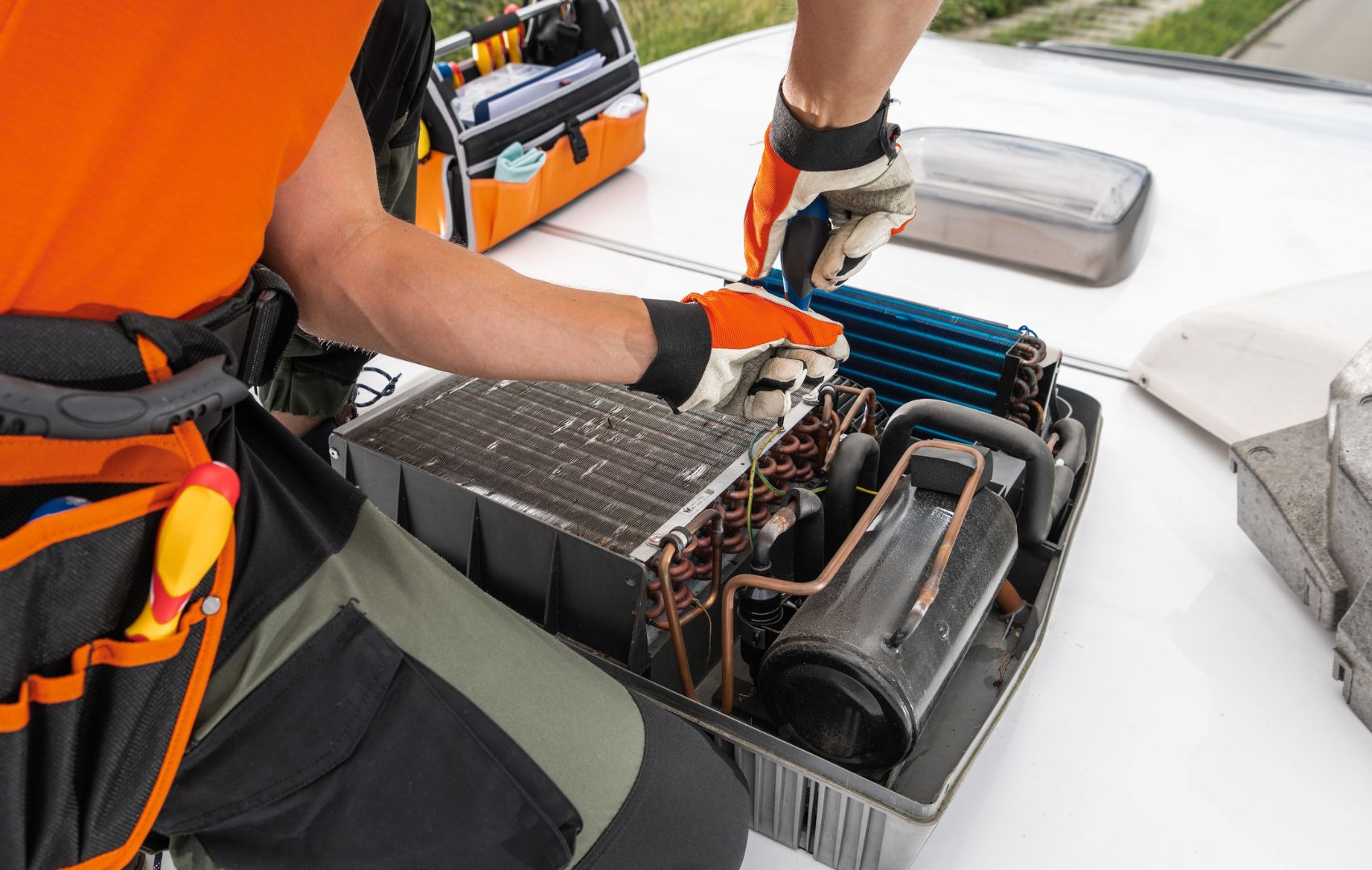
Most RV air conditioners are roof-mounted compressor-type units. Because they sit exposed to the elements, they collect dust, leaves, insects, and other debris over time.
At least once a year, we recommend removing the exterior cover shroud and using compressed air to carefully clear out debris from inside the unit. This helps maintain proper airflow across the coils and internal components.
It is also important to:
- Inspect the shroud for cracks or damage
- Confirm that the shroud is securely attached
- Keep the unit covered during the off-season to prevent debris and small animals from entering
A clean rooftop unit performs more efficiently and is less likely to experience airflow restrictions.
Monitor Ice Buildup and Thermostat Settings
Ice buildup on the evaporator coil can occur under certain conditions. If outside temperatures drop below 75°F, setting the thermostat at a mid-point between warmer and cooler can help reduce the risk of ice formation.
If ice does form:
- Turn off the air conditioner
- Allow the coil to fully defrost
- Run the fan at maximum airflow during the defrost period
Airflow may be reduced while ice is present, but it will return to normal once the coil has completely thawed. Restarting the unit before the coil is fully defrosted can lead to recurring issues.
Understanding how your thermostat settings affect operation is an important part of learning how to properly maintain your RV air conditioner.
Check Electrical Supply and Mounting Hardware
RV air conditioners operate on 120-volt AC power. Certain models with electronic controls also require 12-volt DC power wired to the control board. Ensuring that the voltage supply is correct helps prevent performance issues.
In addition to checking power, it is important to inspect the physical mounting of the unit. Periodically examine the bolts and nuts that secure the air conditioner to the roof. They should be tight and in good condition.
You should also:
- Inspect the drain hole in the drain pan area to ensure proper water drainage
- Confirm that the bulkhead seal separating compartments remains watertight
- Add sealant where gaps are visible
Proper drainage and sealing prevent water intrusion and protect the interior of your RV.
Stay Proactive with Seasonal Maintenance
Preventative maintenance is far more manageable than emergency repairs. Scheduling routine inspections before peak travel season allows you to address small concerns before they affect performance.
We recommend:
- Inspecting the rooftop unit before summer travel
- Cleaning filters regularly during heavy use
- Checking seals and mounting hardware at least once a year
Taking these steps keeps your cooling system operating efficiently and supports longer component life.
Protect Your Comfort Before the Heat Hits
Your RV air conditioner plays a vital role in travel comfort. Clean filters, proper airflow, secure mounting, and regular inspections all contribute to reliable performance. Small maintenance tasks performed consistently can prevent larger service concerns down the road.
If your RV air conditioner is not cooling properly, showing signs of ice buildup, or simply due for a professional inspection, we are here to help. At MR RV Mobile Repairs, we provide mobile service designed to keep your RV comfortable and ready for the road. Call us today to schedule professional air conditioning maintenance and ensure your next trip stays cool and worry-free.